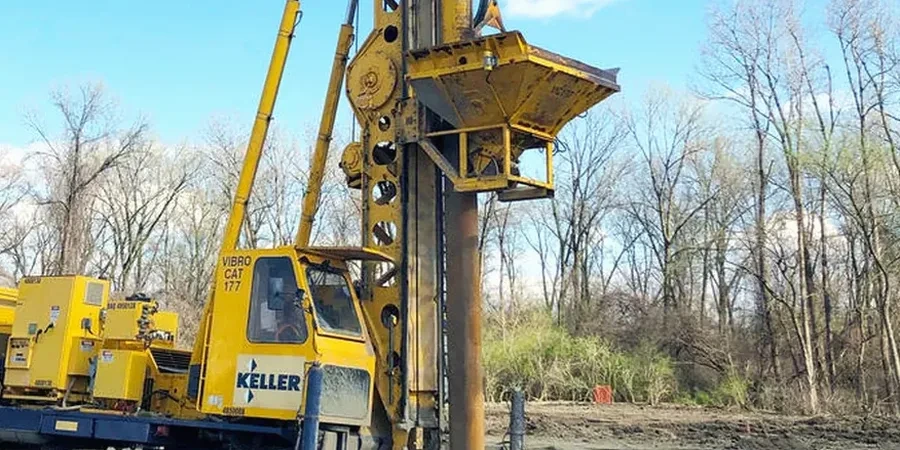
When a depth vibrator rig mobilizes to a site in Pomona, it is not just the 130-foot mast and the eccentric weight assembly that matters—it is the design behind the probe spacing and the energy input. The city sits on the Pomona Basin, a section of the San Gabriel Valley filled with Pleistocene alluvium and recent channel deposits from San Antonio Creek. These soils, often loose sands and silty sands with SPT blow counts below 10 in the upper 30 feet, need more than a standard grid. Our team builds the vibrocompaction design around the fines content, target relative density, and the groundwater table depth—which in parts of Pomona can be as shallow as 15 feet during wet years. We specify the vibrator frequency, the hold time at each depth interval, and the amperage draw that confirms the sand grains have rearranged into a denser state, reducing the void ratio and increasing the friction angle enough to support spread footings or slab-on-grade without excessive post-liquefaction settlement.
Proper vibrocompaction in alluvial sands can lift the relative density from 35 percent to over 75 percent, cutting potential seismic settlement by more than half.