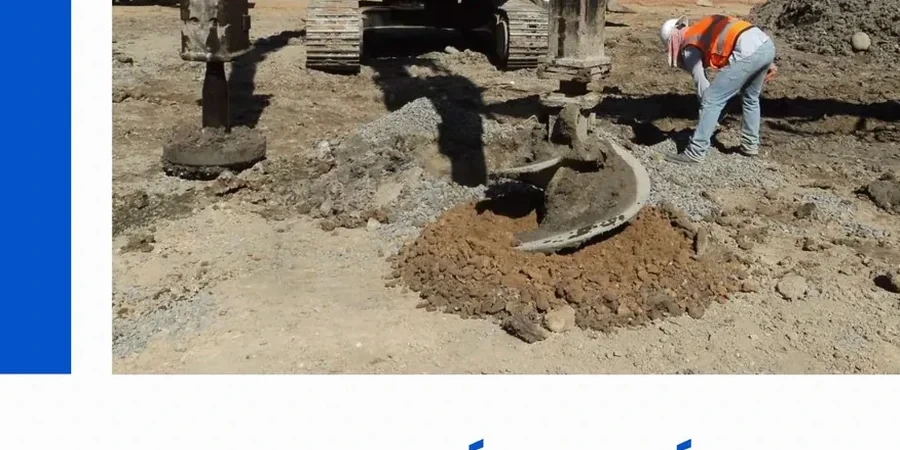
The Pomona Valley sits on a deep, complex alluvial fan where the San Gabriel and San Bernardino Mountains have been depositing sediment for millennia. When we look at a site near the 71 Freeway or up toward Phillips Ranch, we're rarely dealing with uniform soil. The subsurface here is a layered mix of silty sands, clays, and occasional cobble lenses that can make foundation design a headache. That's exactly where stone column design becomes a practical, cost-effective solution. Our approach leans heavily on the site-specific ground motion requirements from ASCE 7, combined with the geotechnical investigation standards of the IBC. We don't just drop a generic design on your project; we model how a compacted gravel column will interact with the in-situ soil profile, considering the seismic demands that are part of life in a city just 30 miles from the San Andreas Fault. Before committing to a full design, many projects benefit from an initial CPT test to map the soft zones with continuous data, which gives us a much clearer picture than standard borings alone.
In Pomona's deep alluvial soils, a well-designed stone column network doesn't just improve bearing capacity—it creates a controlled drainage system that accelerates settlement before the structure is built.