GEOTECHNICALENGINEERING1
POMONA
HomeFoundationsPile foundation design

Pile Foundation Design in Pomona: Geotechnical Logic for the Pomona Valley

Rigorous testing. Clear reporting.

LEARN MORE

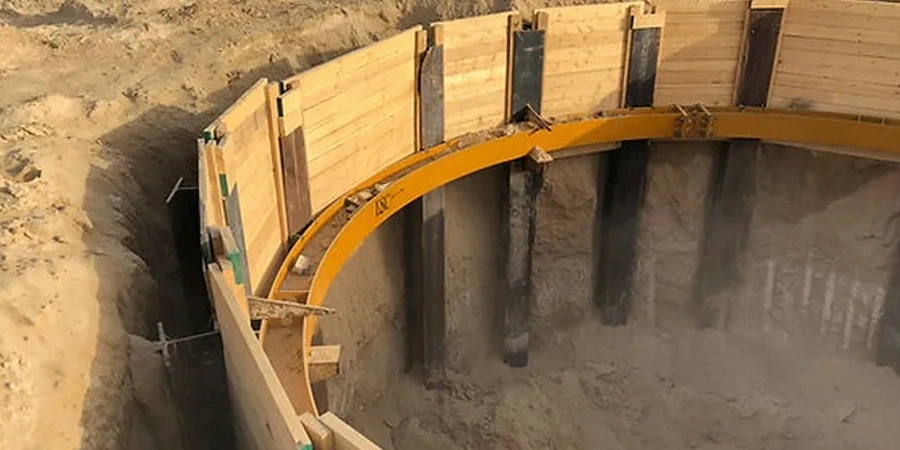
Pomona's grid was laid out in the 1880s rail boom, but its subsurface tells a far older story. The city sits on a deep alluvial fan where the San Jose Creek and Walnut Creek have deposited layers of silty sand, gravel, and clay across the valley floor. Anyone driving Phillips Boulevard toward the 10 freeway crosses ground that can vary from dense conglomerate to loose floodplain sediment within half a mile. That variability is the central challenge for pile foundation design here: a pile tip that finds refusal in one block may punch through soft material on the next. The team working in Pomona routinely correlates boring logs with CPT test data to map these transitions before selecting pile type and length, because relying on sparse data in this geology is a gamble no structural engineer should take.

In Pomona's alluvial fan, pile design is less about capacity equations and more about mapping where the bearing layer actually is — it rarely follows a straight line.
Our service areas

Our approach and scope

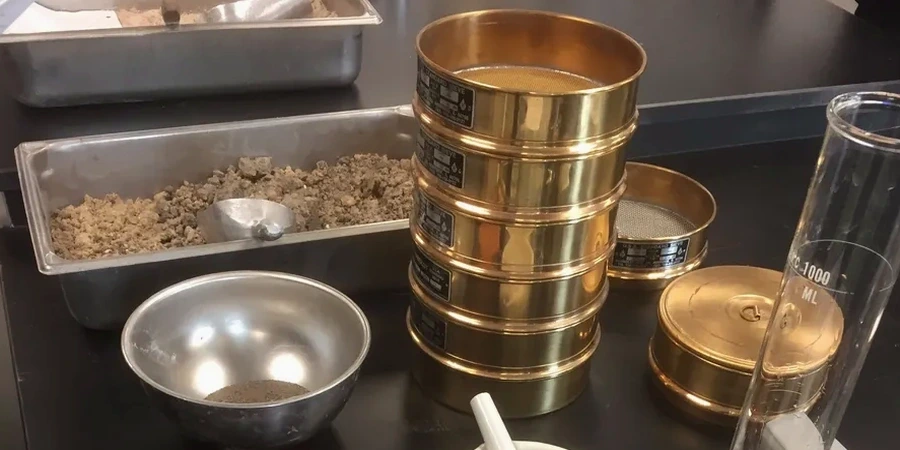
The contrast between the Phillips Ranch area and downtown Pomona is instructive. Phillips Ranch, tucked into the eastern hills, often encounters weathered bedrock at relatively shallow depths — favorable for end-bearing piles but demanding careful drilling to confirm rock quality and fracture spacing. Downtown Pomona, by contrast, sits on thicker alluvial deposits where friction piles are usually the only economical solution. In these deeper soils, the design must account for down-drag if fill is placed after construction, and for pore pressure dissipation rates that affect long-term settlement. The laboratory's approach in Pomona includes site-specific consolidation tests and Atterberg limits on undisturbed Shelby tube samples, feeding parameters directly into the pile capacity models rather than relying on textbook correlations that were developed for different basins altogether.
Pile Foundation Design in Pomona: Geotechnical Logic for the Pomona Valley
Technical reference — Pomona

Local geotechnical context

ASCE 7-22 Chapter 11 maps place Pomona in a zone where both ground shaking and liquefaction demand attention. The water table lies relatively shallow across much of the city — often within 15 to 25 feet — which means clean sand layers in the alluvial fan can lose effective stress during a major seismic event. A pile group designed without a liquefaction-specific analysis may survive the structural loads but fail through lateral spreading or loss of skin friction in the liquefied zone. The standard practice here follows the Seed and Idriss simplified procedure to calculate the factor of safety against triggering, then applies residual strength corrections to the pile's friction capacity through the liquefiable stratum. Ignoring this step in Pomona is not a theoretical risk; it is a direct path to differential settlement that can render a building unsafe even if it does not collapse.

Need a geotechnical assessment?

Reply within 24h.

Email: info@geotechnicalengineering1.com

Relevant standards

IBC 2021, ASCE 7-22, ASTM D1586, ASTM D2487

Typical values

ParameterTypical value
Pile Type AnalyzedDriven H-pile, drilled shaft, micropile
Design StandardIBC 2021, ASCE 7-22
Liquefaction AssessmentSeed & Idriss simplified procedure
Soil Sampling MethodSPT (ASTM D1586), Shelby tube
Lateral Capacity Designp-y curve analysis (LPILE-compatible)
Axial Capacity VerificationCAPWAP or static load test
Settlement AnalysisElastic half-space and t-z methods

Common questions

What is the typical cost range for a pile foundation design study in Pomona?

For a complete geotechnical investigation with boring, laboratory testing, and pile design report, the cost in Pomona generally falls between US$1,570 and US$5,640, depending on the number of borings, depth, and the complexity of the seismic analysis required by the IBC.

How far from the building footprint do you need to explore for pile design?

The IBC requires borings to extend beyond the footprint to capture lateral variability. In Pomona's alluvial fan setting, at least one boring per 2,500 square feet is typical, with at least one boring going to a depth where the stress increase is less than 10% of the existing effective stress.

Do you design both driven piles and drilled shafts for Pomona sites?

Yes. The choice depends on site access, depth to competent bearing layer, and vibration sensitivity. In the downtown area, driven piles are common where deep alluvium exists; in hillside zones like Phillips Ranch, drilled shafts or micropiles often make more sense due to shallow rock and limited access.

How do you account for liquefaction in the pile capacity calculations?

We follow the Seed and Idriss simplified procedure to estimate the factor of safety against liquefaction for each sand layer. Where liquefaction is triggered, the skin friction in that zone is reduced according to the residual strength of the liquefied soil, and lateral spreading demands are checked using p-y analysis with reduced stiffness.

Location and service area

We serve projects in Pomona and surrounding areas.

View larger map