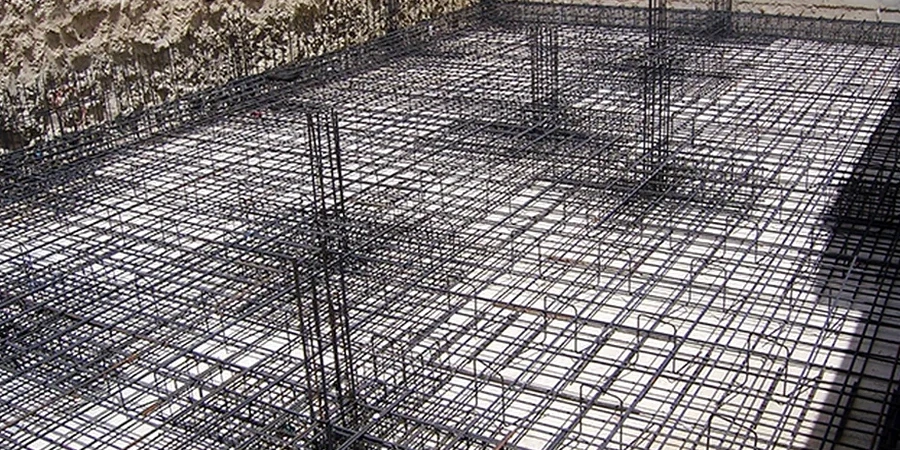
A common mistake we see in Pomona is specifying a conventional footing system without fully accounting for the shrink-swell potential of the local clay. When the A-horizon dries out during summer, differential heave can lift perimeter footings while the interior remains stable, leading to slab cracking and structural distress. A stiffened raft or mat foundation bridges these soil movements, distributing loads across a wider footprint and reducing the unit pressure on the subgrade. This approach requires precise soil-structure interaction modeling, integrating data from our Atterberg limits testing to quantify plasticity and a CPT test to profile the depth of the active zone with continuous tip resistance. We design mats that function as rigid diaphragms, protecting the superstructure from the volume-change cycles typical of alluvial fan deposits east of the San Jose Hills.
A properly designed raft foundation in Pomona doesn't just support the structure—it actively resists the soil's cyclical movement through calculated beam stiffness and strategic reinforcement.