GEOTECHNICALENGINEERING1
POMONA
HomeRoadwayFlexible pavement design

Flexible Pavement Design in Pomona: Practical Solutions for Local Soils

Rigorous testing. Clear reporting.

LEARN MORE

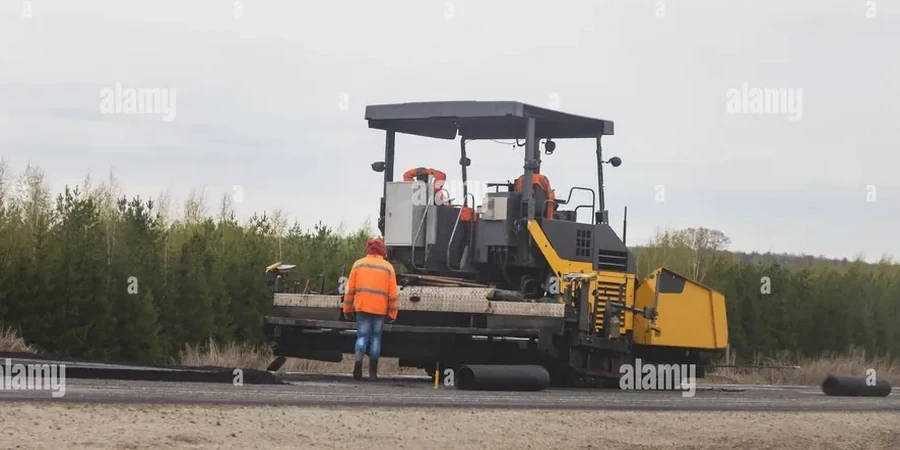
Pomona sits at 850 feet above sea level in the eastern San Gabriel Valley, where summer pavement temperatures can exceed 140°F and winter nights drop below freezing. These swings take a toll on asphalt. A well-designed flexible pavement does more than carry traffic: it manages thermal expansion, distributes wheel loads across a layered system, and keeps subgrade moisture from weakening the base. Our team has calibrated asphalt mixes and aggregate base courses for the decomposed granite and alluvial clay soils common to the 91766 and 91767 areas. We combine in-situ permeability testing with AASHTO 93 structural analysis to determine the right layer thicknesses for industrial lots, residential streets, and commercial parking areas throughout the city.

The difference between a 20-year pavement and one that fails at year 4 is usually 2 inches of aggregate base and a properly compacted subgrade.
Our service areas

Our approach and scope

In Pomona, we frequently see that contractors default to standard Caltrans section tables without checking the actual subgrade strength underneath. That shortcut causes two problems: overdesign that wastes money, or underdesign that leads to alligator cracking within three years. Our approach starts with the resilient modulus of the native soil, measured either through laboratory triaxial testing or back-calculation from field deflection data. For projects near the 71 Freeway corridor, where heavy truck traffic dominates, we also integrate CBR road design inputs to verify that the aggregate base and asphalt concrete layers can handle repeated axle loads without rutting. The result is a pavement structure specific to the site, not a generic catalog pick.
Flexible Pavement Design in Pomona: Practical Solutions for Local Soils
Technical reference — Pomona

Local geotechnical context

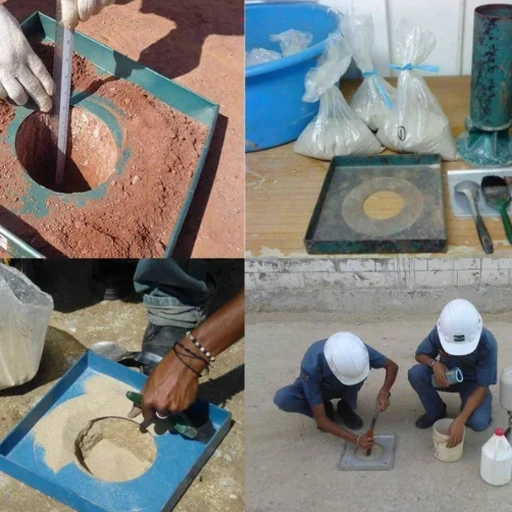
A common mistake we see on Pomona projects is treating the subgrade as uniform across the entire site. The city straddles a transition zone between the alluvial fan of San Antonio Creek and the residual hillsides of the Pomona Valley foothills; soil stiffness can change within 100 feet. When the pavement design assumes one subgrade condition and construction uncovers another, the project either eats the cost of an overbuilt section or risks premature fatigue cracking in a weaker zone. We recommend a program of sand cone density field checks during subgrade preparation, paired with proof rolling, to confirm that compaction and stiffness meet the design assumptions before the base course goes down.

Need a geotechnical assessment?

Reply within 24h.

Email: info@geotechnicalengineering1.com

Watch the video

Relevant standards

AASHTO Guide for Design of Pavement Structures (1993, with local Caltrans supplements), ASTM D1586 – Standard Penetration Test (SPT) for subgrade investigation, ASTM D2487 – Classification of Soils for Engineering Purposes (Unified Soil Classification System), Caltrans Standard Specifications, Section 39 – Asphalt Concrete, ASTM D1557 – Modified Proctor compaction for subgrade and base materials

Typical values

ParameterTypical value
Design Traffic (ESALs)Typically 10⁵ – 10⁷ for local roads and commercial lots
Asphalt Concrete Thickness3 – 6 inches, depending on traffic class and subgrade support
Aggregate Base Thickness4 – 12 inches over prepared subgrade
Subgrade Resilient Modulus (Mr)3,000 – 15,000 psi typical for Pomona Valley soils
Design MethodAASHTO 1993 Guide, supplemented with mechanistic-empirical checks
Performance Period10 – 20 years for commercial; 20 – 30 years for residential streets
Layer Coefficient (a1) for AC0.40 – 0.44 depending on mix type and temperature zone

Common questions

How much does a flexible pavement design package cost for a project in Pomona?

Design packages typically range from US$1,900 for a small commercial parking lot to around US$5,320 for a larger industrial facility or street segment, depending on the number of soil borings and traffic analysis required.

What subgrade strength values do you assume for Pomona?

We don't assume: we test. Pomona soils vary from stiff alluvial deposits near the 10 Freeway to softer decomposed granite in the hills. We run field and lab tests to get a site-specific resilient modulus before any layer thickness is calculated.

Can you use the existing aggregate base if we are just repaving?

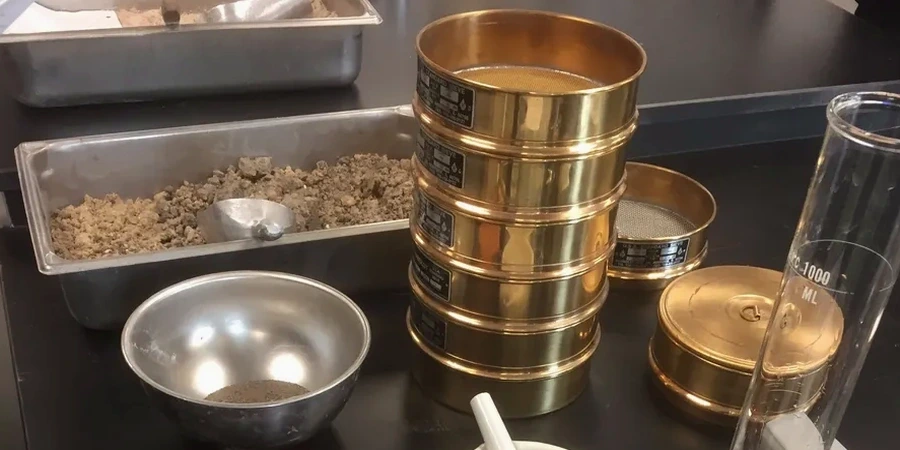
Often yes, provided the base hasn't been contaminated by subgrade fines or saturated. We take cores and run gradation tests on the existing base material to confirm its structural coefficient before including it in the new design.

How do you account for Pomona's high summer temperatures in the asphalt mix design?

We specify performance-graded binders appropriate for the Inland Empire climate, typically PG 70-10 or PG 64-16 depending on traffic speed and loading. The binder grade prevents rutting in the heat while maintaining flexibility during cooler winter nights.

Location and service area

We serve projects in Pomona and surrounding areas.

View larger map