GEOTECHNICALENGINEERING1
POMONA
HomeLaboratoryAtterberg limits

Atterberg Limits Testing in Pomona – Fine-Grained Soil Classification

Rigorous testing. Clear reporting.

LEARN MORE

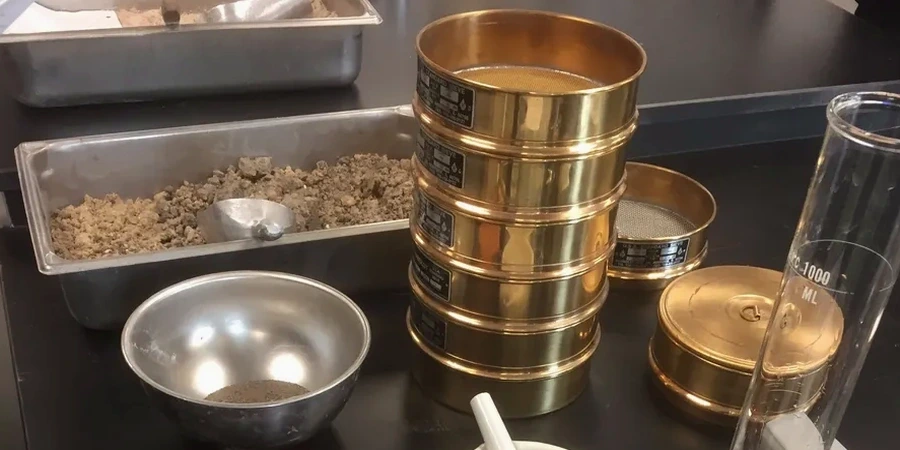
The alluvial fans spreading out from the San Gabriel Mountains shape Pomona's subsurface in ways that demand careful soil classification. Much of the city sits on silty and clayey deposits from the San Antonio Creek watershed, where seasonal moisture swings cause measurable volume changes. At just 850 feet elevation and with 17 inches of annual rain, the near-surface clays here cycle between stiff dry conditions in summer and softer plastic states in winter. That shrink-swell behavior becomes a direct cost driver for foundations and pavements across the 91766-91768 corridor. We run Atterberg limits testing to quantify the liquid limit, plastic limit, and plasticity index of these fine-grained soils, giving Pomona projects a clear picture of how the ground will react to moisture fluctuations over the structure's life. Combined with a grain-size analysis on the coarser fraction, the full classification per ASTM D2487 emerges in a matter of days.

A plasticity index above 25 in Pomona's alluvial clays almost always triggers additional slab reinforcement requirements under IBC Section 1805.
Our service areas

Our approach and scope

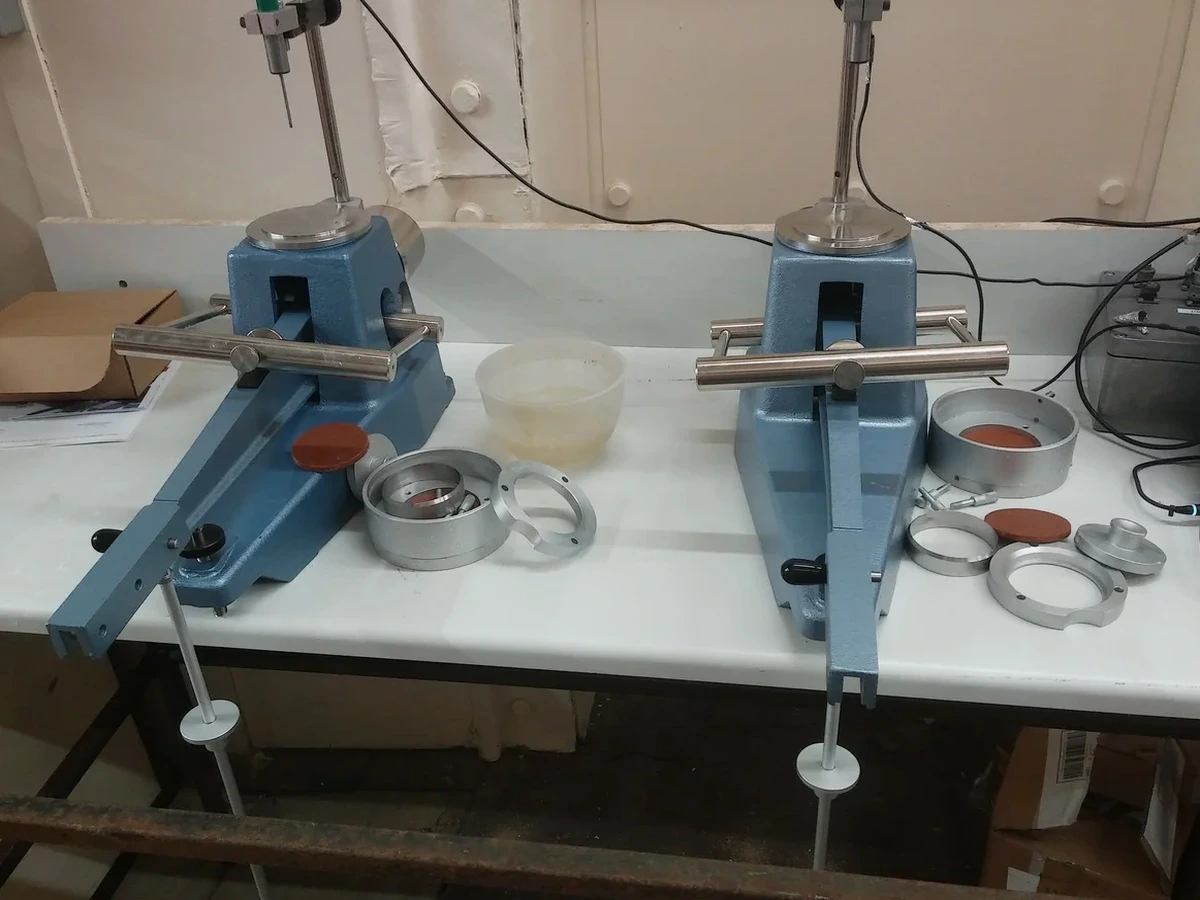
In Pomona, we often see contractors surprised by how much a soil's classification changes just three feet down. The upper weathered zone might look like lean clay, but a foot deeper you hit fat clay with a plasticity index over 30. That difference matters because footing bearing capacity and slab-on-grade reinforcement both hinge on knowing whether you are dealing with CL or CH material. We run the full Atterberg suite on undisturbed and remolded samples, measuring liquid limit using the Casagrande cup method and plastic limit by the 3.2 mm thread rolling procedure, all under ASTM D4318. Turnaround is typically 48 hours. For deeper exploration where the stratigraphy is uncertain, we pair these limits with an SPT drilling program so you get both strength and classification in one mobilization.
Atterberg Limits Testing in Pomona – Fine-Grained Soil Classification
Technical reference — Pomona

Local geotechnical context

Pomona's hot, dry summers and concentrated winter rainfall create a risk scenario that inexperienced teams miss: the upper clay layers can crack deeply in August, then swell 15-20% in volume when the first heavy rains arrive in December. The California Building Code and ASCE 7 explicitly require expansive soil evaluation for foundations in this region. Skipping Atterberg limits on a Pomona hillside lot means you are blind to the plasticity index driving that movement. We have pulled samples from sites near Fairplex where the PI jumped from 18 to 35 across a single boring, exactly at the depth where a contractor planned to bear a shallow footing. That kind of miss turns into slab heave, cracked drywall, and litigation. The cost of testing is negligible next to the exposure.

Need a geotechnical assessment?

Reply within 24h.

Email: info@geotechnicalengineering1.com

Relevant standards

ASTM D4318-17e1 – Standard Test Methods for Liquid Limit, Plastic Limit, and Plasticity Index of Soils, ASTM D2487-17e1 – Standard Practice for Classification of Soils for Engineering Purposes (Unified Soil Classification System), IBC 2021 Section 1803.5.3 – Expansive Soils, ASCE 7-22 Chapter 20 – Site Classification Procedure for Seismic Design

Typical values

ParameterTypical value
Test StandardASTM D4318-17e1
Liquid Limit (LL)Water content at 25 blows (Casagrande cup)
Plastic Limit (PL)Water content at 3.2 mm thread crumbling
Plasticity Index (PI)PI = LL - PL
Sample Quantity Required200 g passing No. 40 sieve
Typical Pomona ClaysCL, CH per USCS; PI ranges 10-40+
ReportingLL, PL, PI, USCS group symbol, moisture content

Common questions

How much does Atterberg limits testing cost for a Pomona project?

Atterberg limits testing on a single sample typically runs between US$60 and US$100, depending on whether you need just the limits or the full USCS classification with grain-size included. Most Pomona sites require 3-5 samples to capture the vertical variability, so a complete package for a standard residential lot generally falls in the US$250-450 range.

How long does it take to get Atterberg limits results back?

Standard turnaround is 48 hours from the time the sample arrives at our lab. If you are on a tight grading schedule in Pomona, we can expedite to 24 hours for a small surcharge. The oven-drying step is the bottleneck—there is no way to rush that without compromising accuracy.

Do I need Atterberg limits if I already have a soil boring log from Pomona?

A boring log tells you the soil type visually, but visual classification is unreliable for fine-grained soils. Two clays that look identical in the field can have plasticity indices differing by 20 points. The Atterberg limits give you the numbers that drive foundation decisions—bearing capacity, slab reinforcement, and drainage design all depend on knowing whether you have CL or CH material.

Location and service area

We serve projects in Pomona and surrounding areas.

View larger map