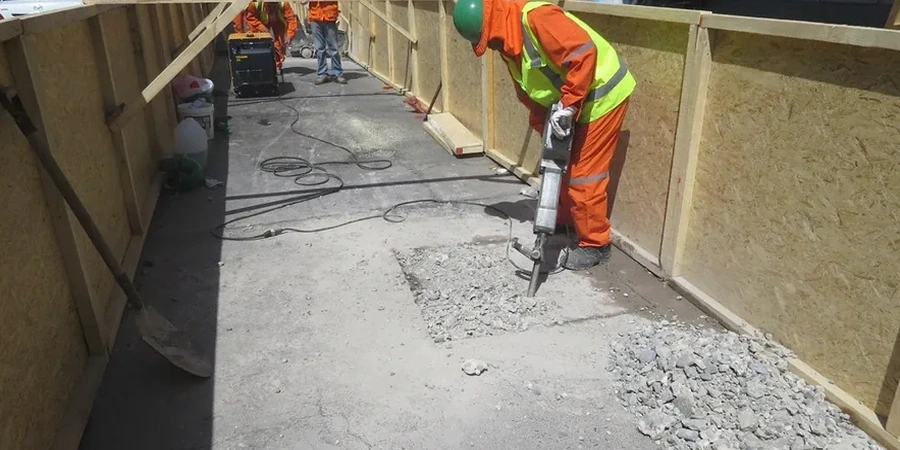
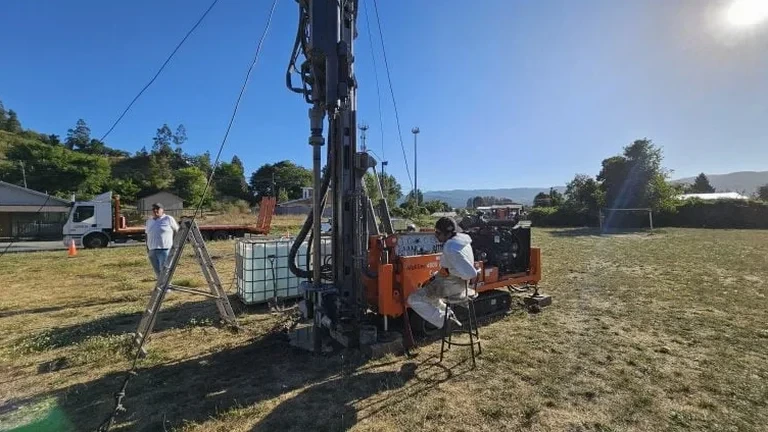
The alluvial fan deposits underlying Pomona, shaped by centuries of runoff from the San Gabriel Mountains, create a subsurface profile that shifts dramatically within a single parcel. Cobbles, boulders, and interbedded silty lenses appear where you least expect them. When boreholes alone cannot resolve these abrupt transitions, a direct visual inspection becomes the only reliable path forward. We open exploratory test pits to expose the stratigraphy in full view, logging material boundaries, moisture conditions, and the presence of oversize particles that a split-spoon sampler would simply refuse. Because Pomona sits on the boundary between the San Gabriel Valley groundwater basin and the Chino subbasin, perched water can appear at shallow depths during wet winters, complicating excavation logistics. Our team handles the permitting, traffic control, and OSHA-compliant shoring so that the pit yields the data you need without delays. For projects where the near-surface bearing stratum must be confirmed before structural design proceeds, we combine the test pit campaign with a plate load test to obtain deformation moduli directly on the exposed bearing surface.
You cannot resolve a cobble matrix with a drill rig alone. In Pomona's alluvial fan, a properly logged test pit eliminates the ambiguity that SPT blow counts leave behind.